
CES 2026: From AI and flying machines to typewriters
Welcome
In the May 2026 ASHB Journal I introduced the wide range of products exhibited at CES 2026, the largest US trade show held each January in Las Vegas. The show was a contrast of futuristic and retro products. There were robotics, lots of AI, and personal flying machines. But there were also a surprising number of retro products with 20th century designs, such as “film” cameras and typewriter keyboards.
In the previous article I surveyed the robotic products. I am continuing the tour here with AI, flying machines, food preparation tools, and audio/video (A/V) gear. I’ll also sample some nostalgic products seeking a 21st century market.
AI at home
Tenet—Home laundry (www.tenetrobots.com)
Tenet is an AI company in California teaming with TCL, the Chinese A/V and appliance company, to introduce an AI-based combo clothes washer and dryer. The washer analyzes the garment materials loaded into the machine to determine appropriate wash and dry cycles, and to alert the user if colors might bleed from one garment. It can also determine how to handle stains that are automatically detected. The analysis is done locally in the machine using a perception engine, decision engine, and execution engine.
According to the company founder, “Laundry is the environment where we can most rigorously show that agentic reasoning, on-device intelligence, and physical execution now operate together as a stable system.” Tenet plans additional products using agent architecture. Agentic AI is a computer programmed with AI to act autonomously as an agent for a human by performing complex tasks with limited supervision, such as shopping and purchasing.
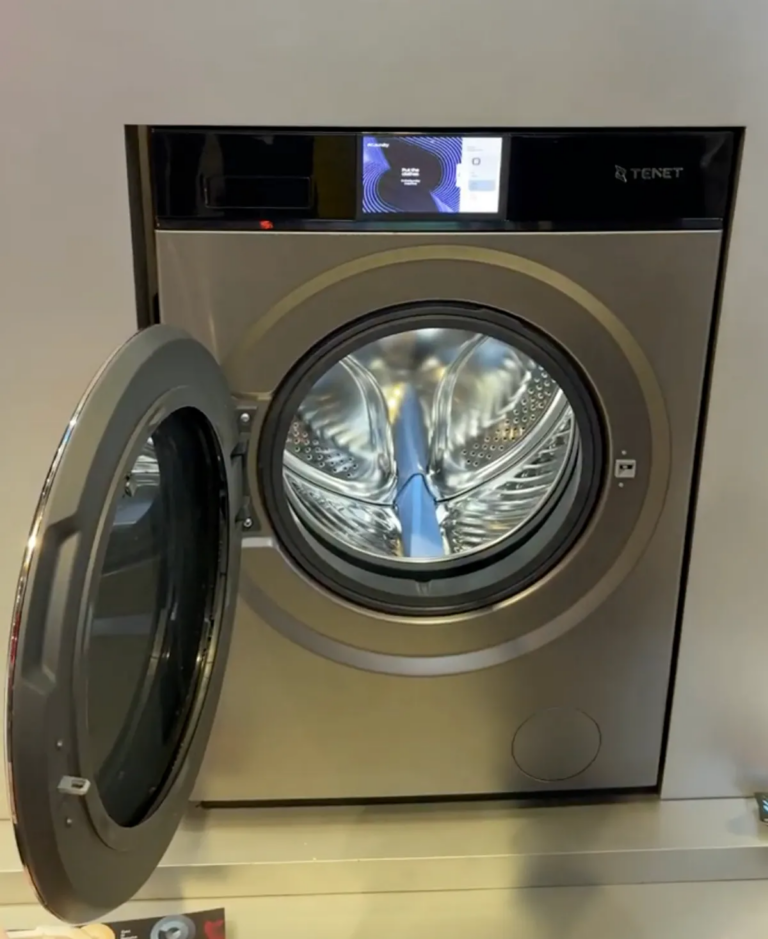
A smart Washer/Dryer
https://www.youtube.com/watch?v=Oj2sdemrMuw
Fitasy—3D printed custom shoe (www.fitasy.com)
Fitasy was founded in 2024 by MIT engineers to develop custom-made shoes that are produced on a 3D printer. The first product is an open mesh-design slip-on shoe that is sized to each foot using measurements obtained from a phone app.
The shoe material is polyurethane manufactured in one printing pass. Regional printing sites reduce shipping costs. Waste and returns are claimed to be 70% less than traditional shoes. Mail order shoes from Fitasy sell for $210. A pre-sized version without using custom measurements costs $180. The company is based in Indianapolis, Indiana.
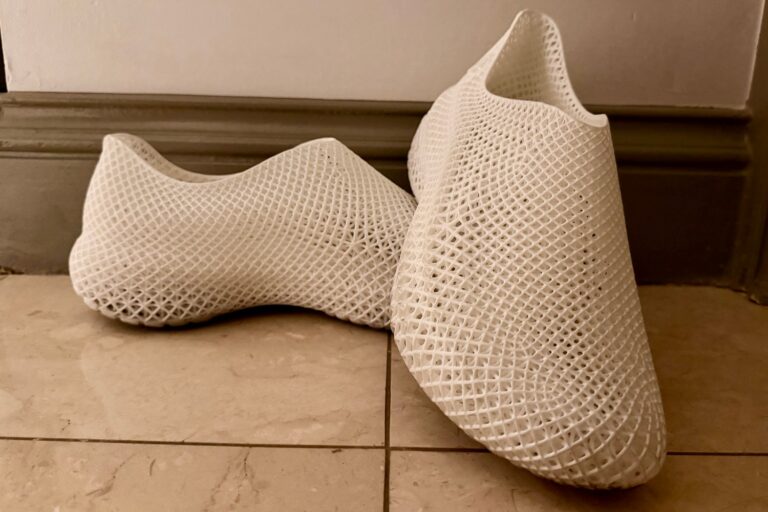
Custom Shoes Made on a 3D-printer
https://www.youtube.com/watch?v=5AgSzy2C-4o
Sleepal—Lamp for AI Sleep System (www.sleepal.ai)
Sleepal is a new product to promote sleep using extensive monitoring and AI-based analysis. It consists of a controllable bedside lamp and multiple sensors. These measure noise such as snoring, body positioning, heart rhythm, breathing pattern, temperature, relative humidity, and light intensity. The measurement technology to track body movement uses millimeter waves.
Sleepal can also track daytime activities and health data for a more comprehensive analysis of your sleep. It controls the lamp intensity and ambient white noise to promote sleep. The device provides guidance for improving sleep patterns via a smart phone app. Sensor data are stored locally; sleep insights are processed in the cloud. Sleepal is a product of XSmart Technology, based in Hong Kong. A Kickstarter campaign to fund product development is planned.
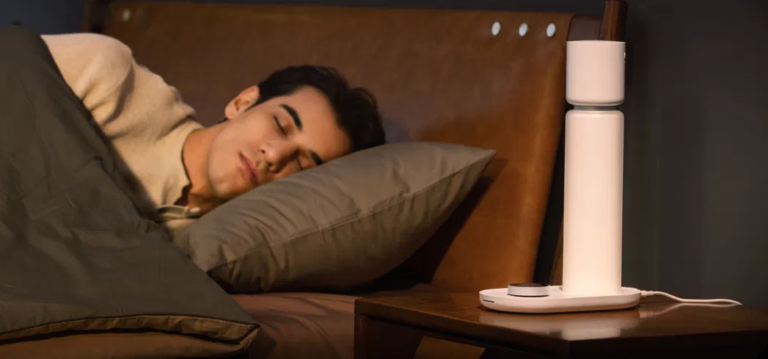
A Computerized Light to Promote Sleep
https://www.youtube.com/watch?v=HKVhcuupZzA
Joy Calls—Joy, the AI Companion (www.joycalls.ai)
Joy is an AI companion developed by OnScreen, Inc. of Yorba Linda, California. The mission of this company is to provide technology that keeps older people healthy and connected. It is an AARP® AgeTech Collaborative™ Portfolio Company, a group of companies organized by AARP to focus on the needs of “the $45 trillion global longevity market”.
Joy Calls are placed by phone to the patient using an AI voice companion to deliver medicine reminders, check-ins, chats, jokes, and stimulation for the mind via trivia games. Caregivers such as relatives too busy to call can get reports of the computer phone calls. A web app offers recommendations for the caregivers. One two-minute call per day is free. Up to five 20-minute calls per day cost $30 a month.

A Computer Voice Companion
https://www.youtube.com/watch?v=AWNyQvoZgSE
Flying machines
LEO Flight—Personal drone (www.leoflight.com)
LEO Flight was started in 2021 to design personal aircraft. The company won a NASA (US National Aeronautics and Space Administration) HeroX award for innovation. The Solo Jetbike demo was produced in 2023. Pre-orders started in 2025 at $99,900 with a $999 deposit. Late 2027 is the target date for production.
The JetBike uses a clustered electric-jet propulsion system like a drone. It is a fixed-wing ultra-light aircraft that flies at low altitudes with the stability of a hovercraft. It operates under FAA (US Federal Aviation Administration) Part 103 rules. These rules limit seating to one person for recreational or sport flying at a maximum of 63 miles per hour.
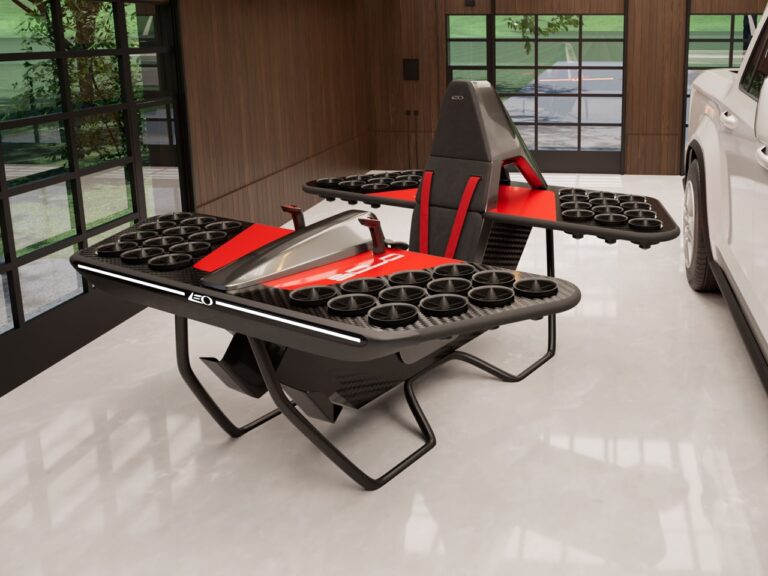
The Solo Jetbike
https://www.youtube.com/watch?v=4ogXGJzFOOk
Rictor—Flying motorcycle (www.kuickwheel.com)
The Rictor “smart mobility brand” was incubated by KuikWheel Technology of China for accessible personal flight. Rictor brought the Skyrider X1 to CES 2026. It operates on land, sea, and air using a four-axis eight-propeller system.
The Skyrider X1 is constructed from carbon fiber and aluminum, and can fly up to 40 minutes at 63 miles per hour under FAA Part 103 rules. It can be programmed to fly automatically toward a preset destination, such as commuting in an urban environment. A joystick for manual flying is available. Safety systems and a parachute are included. The starting price is $60,000.
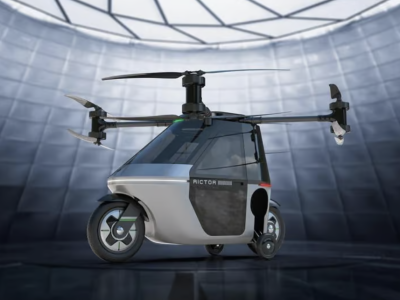
A Flying Motorcycle
https://www.youtube.com/watch?v=lytP8l6QCjo
Food preparation
wan AIChef—An adaptable oven (www.global.wanaichef.com)
Shenzhen Wan AIChef Technology Co., Ltd. bills itself as an AIoT innovator, combining AI with IoT, the Internet of Things. The oven looks like a microwave oven, but is “load and go” without any dials or timer to set.
The oven uses computer vision to analyze the foods placed inside and determines how to cook the contents. It can distinguish raw foods from ready-to-cook meals, and can handle multi-dish combinations. The company claims the machine can cook a “juicy steak + crunchy asparagus” on the same plate using multi-zone temperatures with ±5.4 °F precision.
The oven includes an expanding library of more than 1000 recipes from professional chefs, adapted to local tastes. The oven costs $4000.
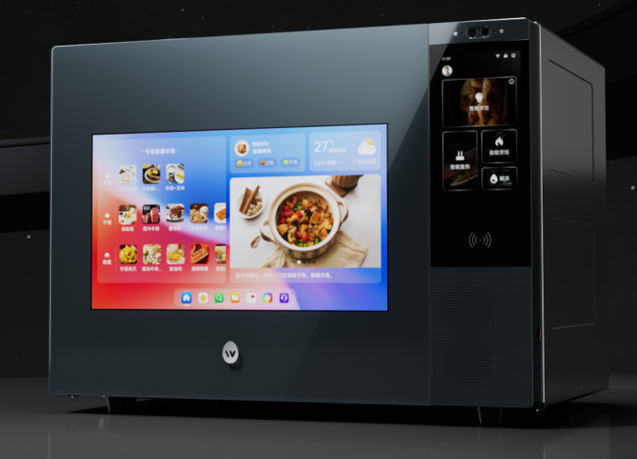
A smart Oven
https://www.youtube.com/watch?v=DkaX-DoC84s
NOSH—A robot chef (us.letsnosh.io)
NOSH prepares and cooks a meal starting with the ingredients. You act as the sous chef1 by preparing the mis en place: gathering and loading the ingredients such as raw vegetables, herbs and spices, oils, and any proteins.
The machine slices, dispenses, sautés, and cooks the ingredients in the order and for the time or degree of doneness specified in a recipe. The recipes can be tailored to taste and health preferences. Each cooking stage is monitored by the NOSH computer. The recipe repertoire covers breakfast, snacks, appetizers, soups, and dinner for a variety of international cuisines.
This appliance is made by Nosh Robotics Private Limited from Bengaluru, India and costs $1200.
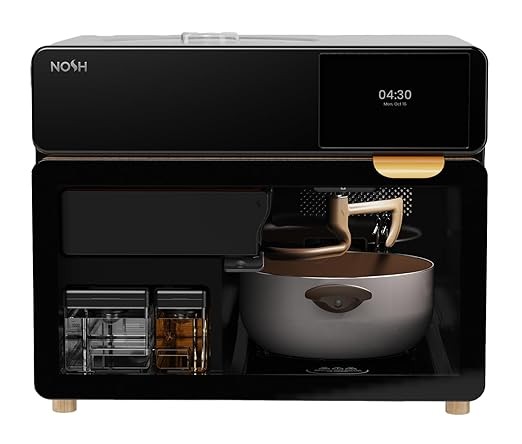
One Appliance Prepares and Cooks Food
https://www.youtube.com/watch?v=qhV1lXGUOsQ
Audi/Video
Tactus—Feel the music (www.tactusmusic.com)
Tactus Music, a Boston-based company, makes clothing that conveys music vibrations through transducers in the material so people with limited hearing can sense the music. The product tagline is “Feel the beat, wherever, whenever.”
Tactus Music is selling a jacket and a vest for $495 each containing “advanced vibration technology” called Vibewear. The garment includes speakers linked to a nearby music source via Bluetooth. The electronics and a rechargeable battery are included in the clothing. Tactus Music is supported by Northeastern University, the Lowell Campus of the University of Massachusetts, and MassChallenge. MassChallenge started in Massachusetts in 2009 and “is now a global network connecting startups, experts, and partners across industries and continents” that has helped 5000 startups raise more than $16 billion.
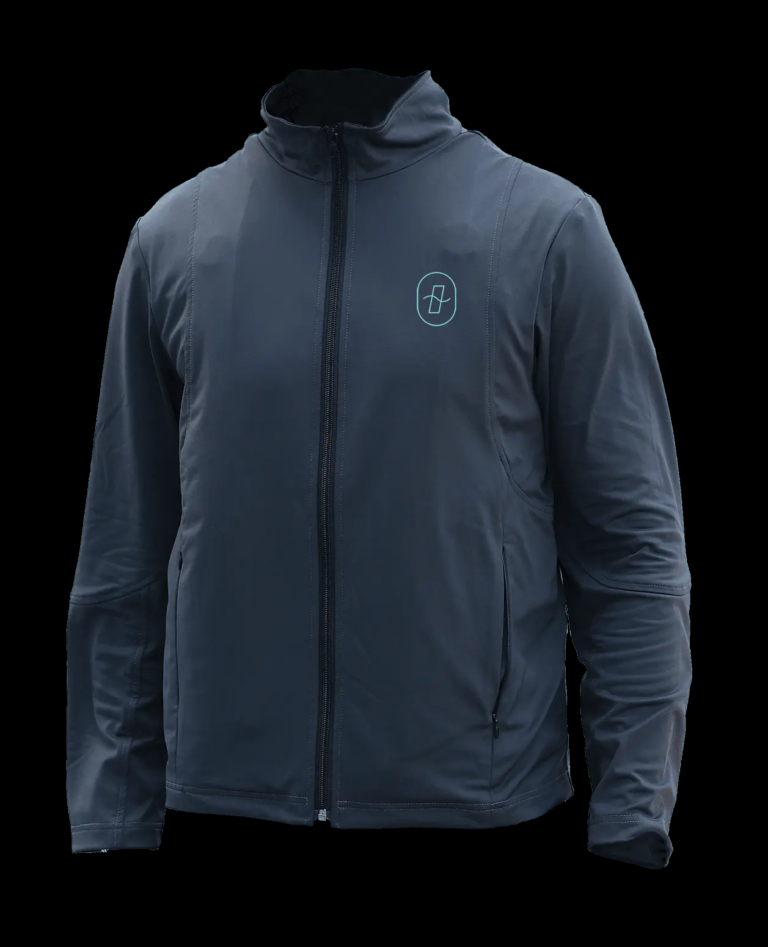
Feel the Music
https://www.youtube.com/shorts/Bjr84Bvl3Hs
Fotostax—Photos with motion (www.fotostax.com)
Fotostax is a smart phone app linked to a special printer that can produce 3D and images with apparent motion. The product is reminiscent of a Polaroid snapshot with the addition of motion and 3D.
The company, a recent startup in London and Bethesda, Maryland, has not yet launched the product.
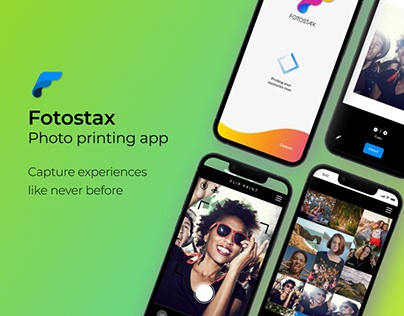
Print 3D and Motion Photos
https://www.youtube.com/shorts/_1Io1Ge7W4Q
Skywave—Surround sound (www.ultimea.com)
Ultimea specializes in surround sound for home theaters. The company claims to be the largest seller of surround sound systems in 100 countries.
The X70 systems provides a 7.1.4 speaker system that simulates front left, center, front right, side left, side right, rear left, rear right, subwoofer, and four overhead speakers. The actual speakers provided are eight in a soundbar including two upfiring and a separate subwoofer (10”, down to 20 Hz). Two rear small speaker boxes each contain a forward and an upfiring powered speaker.
Dolby Atmos encoding creates the 7.1.4 sound field. The speakers are driven by a NEURACORE™ Neural-Level Processor (controllable via an app), wireless communications, and 980 Watts of peak power. The cost for this soundbar including speaker stands is $809.
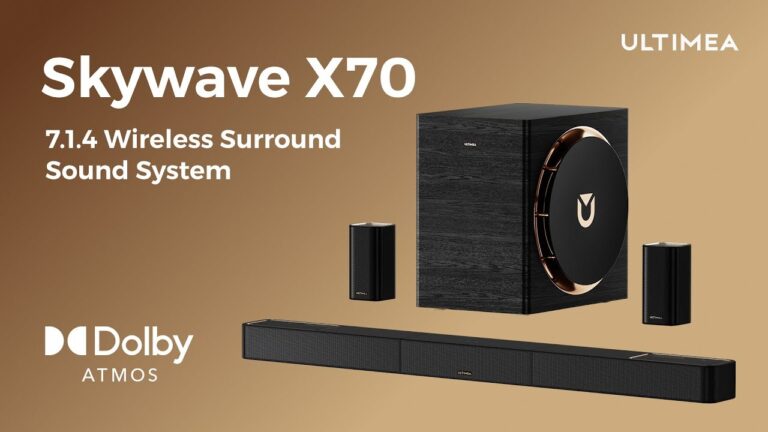
A Surround Sound System
https://www.youtube.com/shorts/SXUOKEu6qGA
Klipsch—Reference speakers (www.klipsch.com)
Kilpsch has updated the top end of their speaker line with the Reference Premiere. This speaker continues the horn-loaded technology introduced in 1946 with a larger 90° x 90° silicone-composite hybrid horn for more efficient transfer of high frequencies. The woofer uses ceramic/metallic material with an aluminum shorting-ring to reduce distortion and titanium tweeters minimize distortion. These speakers are in a cabinet with additional bracing and a divided cabinet volume to add rigidity and reduce vibration and resonance for clarity. The speaker cabinets are designed to create a slim appearance.
Some of the Reference Premiere speakers support Dolby Atmos with “elevation speakers” for creating a 360° immersive experience. The top-of-the-line RP-8060FA II (the tall speaker assembly in the photo) with the Dolby upfiring speaker embedded in the top of the cabinet costs $1300 each.
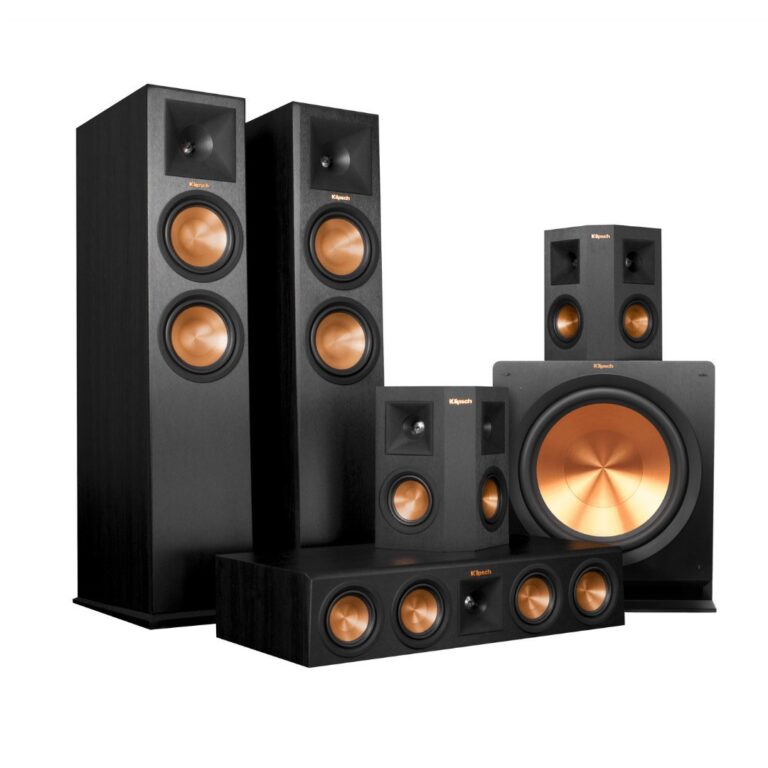
The Klipsch Reference Premier Speakers
https://www.youtube.com/watch?v=fgo1pqkn0LE
Nostalgia
Stern—Pinball machines (www.sternpinball.com)
Stern Pinball was founded in the early 1930s by Sam Stern. Sam was part owner of Williams Electronics. Williams, Bally, and Gottlieb created the pinball industry. The company makes machines ranging in prices from $6000 to $9700. Additional knobs, signs, toppers, and even gaming clothes are sold as accessories.
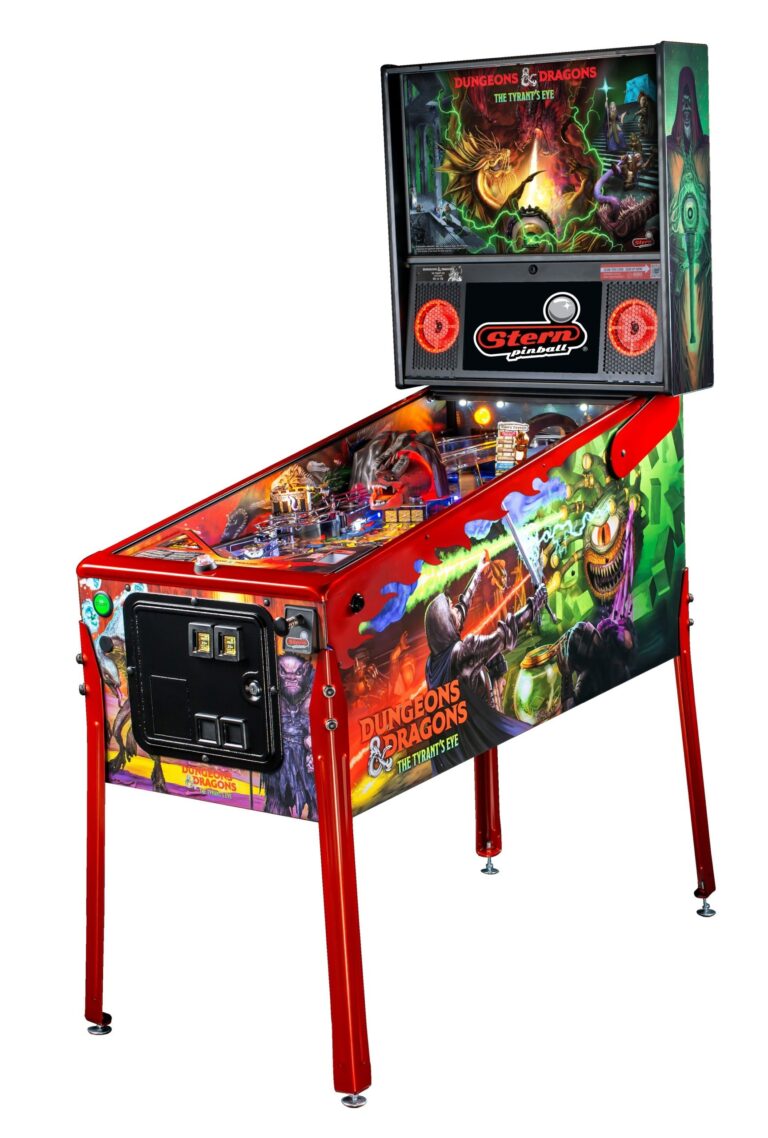
An Updated Pinball Machine
https://www.youtube.com/watch?v=C39psel4aGo
Flashback—Digital film camera (www.joinflashback.co/en-us)
Flashback is a new Australian company that has created a camera reminiscent of a Kodak Instamatic. The camera can take 27 photos. However, a “mechanical winder” must be operated between shots.
After 27 photos, the “film roll” must be developed. Developing a roll consists of connecting the physical camera to a smart phone or computer to upload the 13 Megapixel photos. After uploading, another 27 photos can be shot.
To simulate the delay and anticipation of developing a roll of film, the system can prevent viewing of the exposed photos for 24 hours. This is described as the “optional Film Camera Mode with 24 hours of delayed gratification.” The camera is available in a variety of two-tone colors for $119.
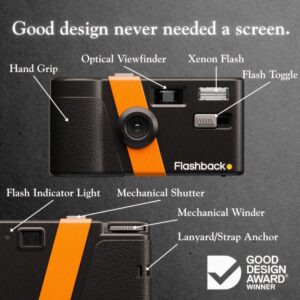
Film in the Digital Age
https://www.youtube.com/watch?v=Udwh0Qi-VFM
Qwerkywriter—Typewriter keyboard for a computer (www.qwerkywriter.com)
Qwerkywriter® from Querkytoys is a fully functioning keyboard using mechanical typewriter keys. The keyboard connection to the computer is wired or wireless. The return bar is equivalent to Enter, or can be programmed with a macro to generate up to 15 characters.
The prototype was built from mechanical typewriter parts. The company started in 2014 with about $129k in Kickstarter funding. The first model is sold out. The QWERKYWRITER 2 shipped in March 2026 for about $280. A detached numeric keypad costs $130.
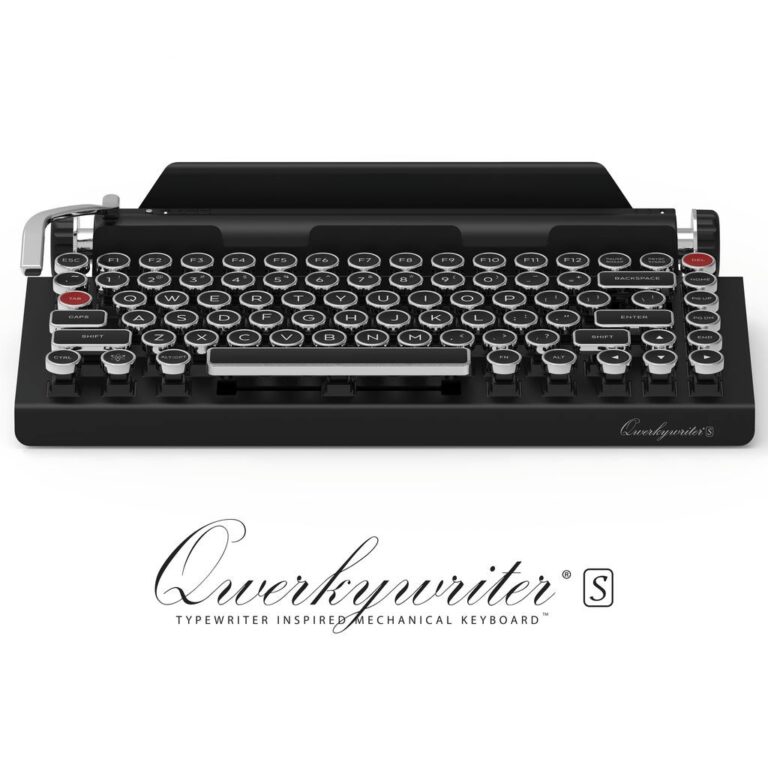
A New/Old Computer Keyboard
https://www.youtube.com/watch?v=YDVDG4rzoAk
Chronomade—Analog phone case (www.chronomade.co)
Laundrobot Corporation of San Francisco specializes in mechanical designs. As stated on the company website, “We design and manufacture products inspired by the timeless artistry of horology.” The parts are finished with hand polishing. The watch escapement can be wound and will tick for about 30 seconds.
The case shown is called Escapement and is sold out for Samsung and Apple phones at $275. A custom version for the iPhone 17 Pro Max shipped in late February 2026 for $425.
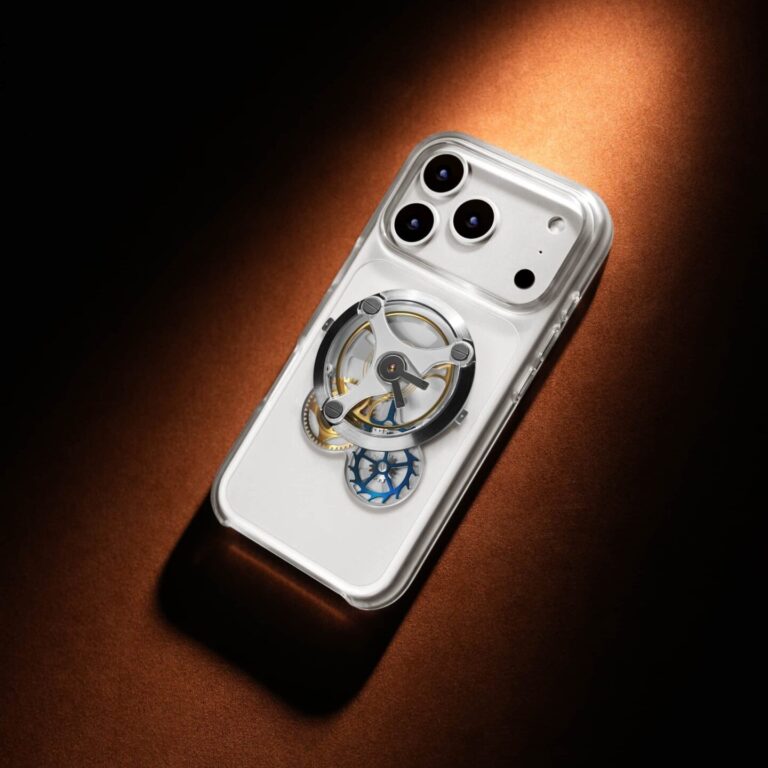
What Make a Smart Phone Tick?
https://www.youtube.com/watch?v=aM-e5sVau-w
The Las Vegas sign reimagined
The artist Daniel Arsham redesigned the famous Las Vegas welcome sign to add a touch of nostalgia. The sculpture shown is displayed inside the Las Vegas Convention Center West Hall lobby. It was commissioned for ComplexCon, a convention on “culture, fashion, art, music, food, and tech” held October 2025 in Las Vegas.
Facilities and Destinations, a trade magazine, explained this sculpture:
“Known for transforming familiar icons into imagined ‘future relics,’ Arsham, … reinterprets the world-famous Las Vegas sign with an oxidized bronze finish that merges nostalgia with futurism. The piece reimagines the symbol not only as a marker of place, but as a monument to memory, reinvention, and the ever-evolving energy of Las Vegas itself.”

Welcome to Las Vegas
(5100 Las Vegas Boulevard South)

“Nostalgia with Futurism” Welcome
(Las Vegas Convention Center, West Hall)
© Copyright 2026 Kenneth P. Wacks, All rights reserved

Dr. Ken Wacks has been a pioneer in establishing the home systems industry and a management advisor to clients worldwide. His business specialties include IoT (Internet of Things), cybersecurity, standards for home and building systems, AI-based energy management including renewables, and digital media networks. He also provides due-diligence for investors and expert witness services for litigants including patent, employment non-compete, trade secret, and other legal disputes. Please visit www.kenwacks.com or contact Ken at +1 781 662-6211; [email protected].
1. Sous chef is the second-in-command in the kitchen.


