

Retrofitting Commercial Buildings with Smart BAS for Deep Energy and Carbon Reduction
Mitigating climate change is becoming more urgent than ever, and this urgency has underlined the need to cut carbon emissions in the built environment. Commercial buildings contribute to a good part of the energy consumed around the world, especially those built before modern efficiency guidelines. An economical and easy route to make deep energy and carbon cuts to the built environment is retrofitting with smart Building Automation Systems (BAS).
This article focuses on existing building inefficiencies and suggests smart BAS techniques and solutions that take advantage of real-time monitoring, smart control, and system integration. The paper highlights the possibility of substantial energy conservation, higher levels of operational efficiency, and less environmental degradation. It concludes with the challenges of BAS and its future.
Introduction
Business premises significantly contribute to electricity and fossil fuel consumption and carbon emissions worldwide. A large percentage of these buildings were designed and constructed without sophisticated energy-efficiency plans, leaving them with outdated systems and inefficient controls under contemporary use. As cities grow alongside energy needs, sustainability strategies focus on enhancing the performance of old buildings.
Retrofitting is widely known as an efficient way of improving building performance, but conventional retrofit strategies usually require extensive capital investment and physical restructuring. In contrast, the adoption of smart Building Automation Systems is a more flexible and less invasive approach. Using centralized control and data-driven optimization of building systems, BAS makes it possible to manage existing infrastructure at much higher efficiency rates. BAS offers constant monitoring and control over major systems (heating, ventilation, air conditioning and lighting), adjusting them through sensors, communication networks and advanced control algorithms. The result is reduced energy use, increased occupant comfort and more reliable operations, making BAS a major player in the shift back to low-carbon commercial buildings.
Inefficient Building Systems: The Biggest Obstacle to Sustainability
Despite today’s awareness of the need for sustainability, more and more commercial building systems are inefficient. A lack of integration and coordination among building subsystems is one of the main obstacles. HVAC, lighting, and other components that consume a lot of energy commonly operate separately, resulting in redundant operation and excessive energy consumption. For example, heating or cooling systems may run at full capacity when nobody is using the space, leading to energy waste.
Another critical issue is the reliance on static control strategies. Conventional systems typically run on fixed schedules that are not updated to reflect real-time changes in occupancy, weather, or operational needs. This inflexibility diminishes overall efficiency and pushes up operational costs. Additionally, limited visibility into energy consumption patterns prevents facility managers from identifying inefficiencies and implementing targeted improvements.
Inappropriate infrastructure is another problem. Most existing buildings cannot meet the requirements of modern energy management technologies. Most equipment controllers are outdated, which limits optimization, automation, and real-time information. All of this leads to excessive energy use and high carbon emission rates.
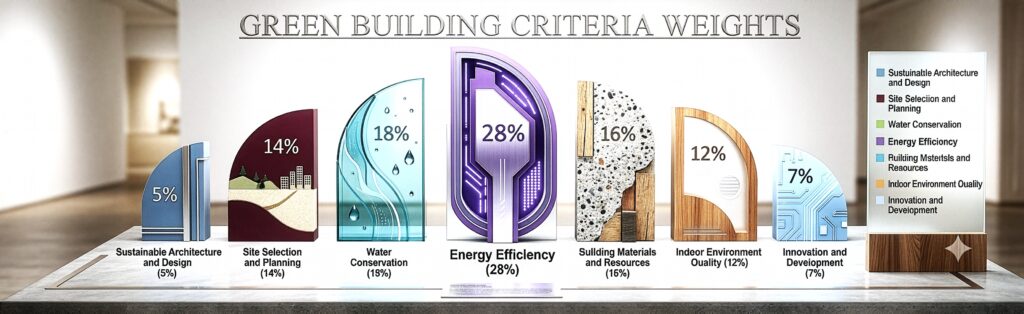
Figure 1: Sustainable Building: Key Parameters Distribution
Smart Control Systems for Sustainable Commercial Buildings
Smart Building Automation Systems can resolve issues with inefficient commercial buildings. BAS allows different subsystems of the building to work together with intelligence and control, enhancing energy conservation.
The foundation of BAS is a system of sensors that constantly records information about the environment, occupancy, and system operation. Controllers process this data and find the best operating points, transmitting instructions to actuators that modulate system behavior. As an example, lighting and HVAC output can be minimized in unoccupied parts of a building through occupancy sensors, reducing energy waste without sacrificing occupant comfort. State-of-the-art control options improve system performance. Demand-controlled ventilation can modulate airflow based on air quality and occupancy levels, reducing the energy needed to condition outside air. Instead of fixed schedules, adaptive scheduling enables systems to dynamically react to changes in building use. These capabilities allow buildings to perform efficiently amid changing conditions.
Monitoring and data analytics in real time are also part of BAS functionality. Facility managers can gain more in-depth knowledge of energy usage, identify areas of waste, and take corrective measures. Fault detection and diagnostic functions enable early detection of equipment problems, saving energy and decreasing maintenance expenses. Moreover, BAS can be combined with renewable energy sources such as solar PV panels to maximize energy production and consumption, further minimizing carbon emissions.
BAS-based retrofit projects have shown strong potential for energy and carbon reduction, offering an efficient channel to sustainability by upgrading instead of discarding current systems. The efficiency, reliability, and occupant comfort offered by BAS make it an appealing choice in a host of commercial buildings.
IoT and Artificial Intelligence in the Evolution of Smart Buildings
The ongoing transformation of digital technologies will continue to influence Building Automation Systems. The Internet of Things (IoT) allows for the implementation of more advanced sensor networks, offering finer information resolution and better system responsiveness. Such enhanced connectivity enables more accurate control and optimization of building functions.
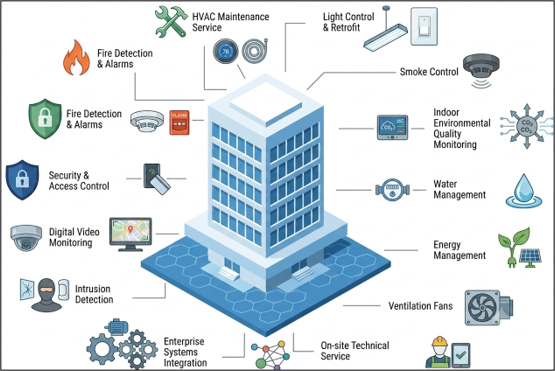
Figure 2: AI and Big Data Analytics for Building Management Systems
Machine learning and artificial intelligence are also becoming increasingly significant in the development of BAS. Such technologies can provide predictive control strategies that anticipate changes in occupancy and environmental conditions. This allows systems to adapt in advance rather than react after the fact. This predictive and autonomous operation can make a major contribution to saving energy and lowering carbon levels.
The development of digital twins is another new trend that generates virtual models of actual buildings. These models help managers simulate and analyze various operating conditions to make better decisions and optimization plans. Integrating BAS with smart grids enables demand response and energy load flexibility, letting buildings stabilize the broader grid with minimal energy expense.
Regulatory frameworks and sustainability targets are expected to become more stringent, which will accelerate the adoption of smart automation systems. There is a growing trend among governments and organizations to acknowledge the significance of retrofitting existing buildings as a part of their overall decarbonization initiatives. In that regard, BAS will be instrumental in the shift to net-zero energy buildings and green cities.
Final Thoughts on Building Automation and Sustainability
Implementing intelligent Building Automation Systems in commercial buildings can be seen as a groundbreaking way to address the issues of energy waste and the carbon footprint of the built environment. Through system integration, smart control, and real-time data monitoring and response, BAS can achieve enhancements in building performance without the physical changes that often require significantly more investment, time, and effort. Although there are still challenges related to upfront costs, system integration, and technical expertise, these challenges are outweighed by the long-term benefits, such as reducing energy consumption, lowering operational costs, and enhancing sustainability outcomes. Further improvement of digital technologies and growing attention to environmental responsibility are likely to further stimulate the use of BAS within the next several years. Finally, intelligent automation systems will be a cornerstone in the drive toward decarbonizing commercial buildings to achieve a more sustainable and energy-efficient future.

Pradip Thorat is a LEED Green Associate and is working with NRG Controls, Harrisburg, USA, as a Sr. Controls Engineer. He possesses global experience across the United States, the Middle East, Canada, and India, working with Honeywell Automation & Johnson Controls. His specialization is in Building Automation Systems design, Sustainability, indoor air quality, and biomass energy. He has delivered a complex project focusing on the reduction in energy consumption and operational costs through advanced retrofit control strategies. He has authored multiple technical papers in international journals. Contact: [email protected]


